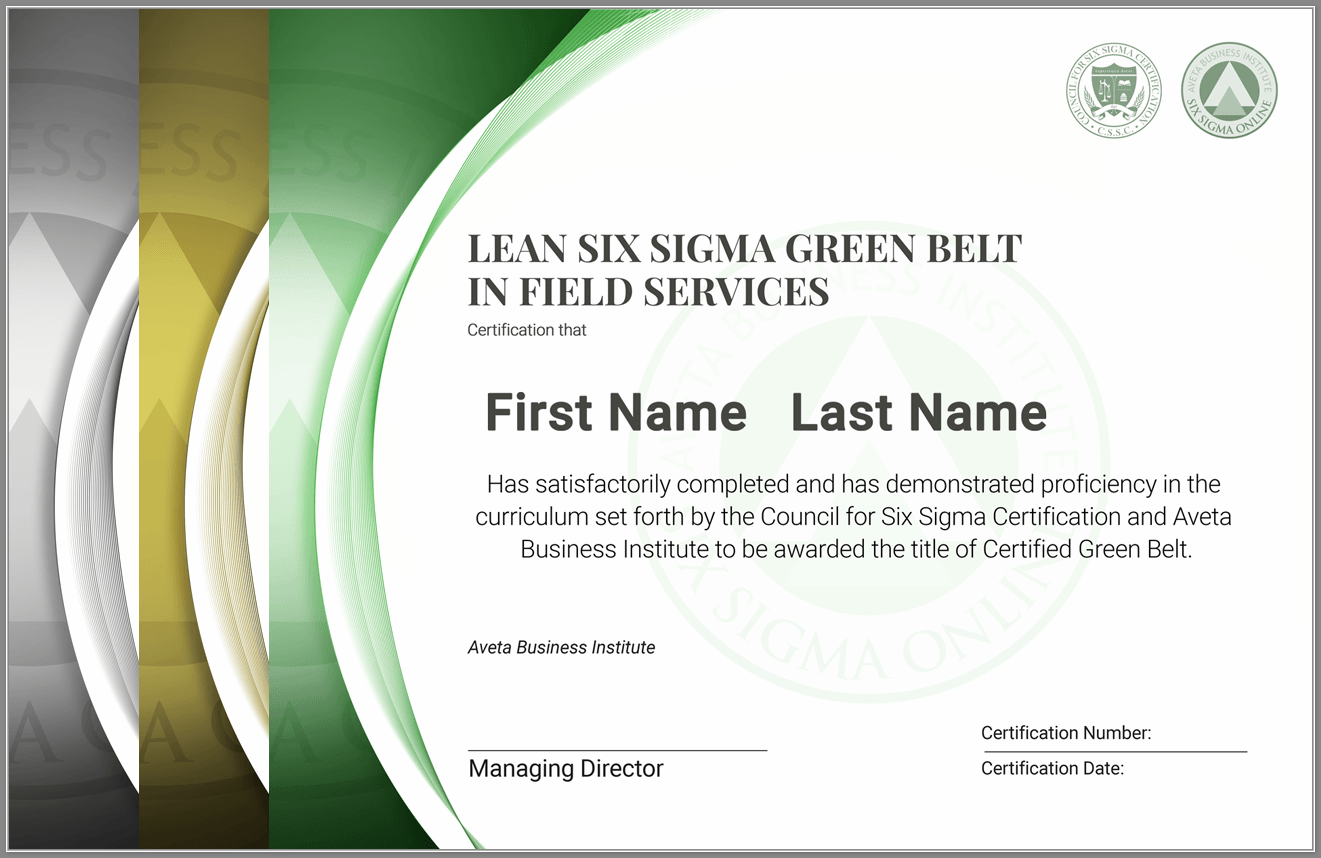
Lean Six Sigma Green Belt certification provides field service professionals with the tools to analyze performance data, identify inefficiencies, and implement sustainable improvements. Certified technicians can lead projects that reduce downtime, improve customer satisfaction, and increase operational reliability across dispersed service networks.
Green Belts can lead projects focused on reducing repeat visits, optimizing maintenance schedules, and improving parts availability. Using tools like Pareto analysis and root cause identification, they can target the most frequent causes of delays or equipment failures and deliver measurable gains in uptime and performance consistency.
Green Belt training teaches service teams how to collect and analyze process data to uncover the root causes of response delays. By standardizing procedures and optimizing routing, teams can achieve faster, more predictable service times. These improvements directly boost customer confidence and satisfaction.
Yes. Green Belt–certified professionals act as a bridge between field operations and corporate management by applying Lean Six Sigma principles to align daily performance with strategic objectives. This ensures that service quality, cost efficiency, and compliance standards are met across all operational levels.
No. Six Sigma certifications issued through the Council for Six Sigma Certification (CSSC) do not expire. CSSC believes that renewal fees primarily benefit certification providers, not professionals. Much like a degree, your Six Sigma certification remains valid for life.
If you would like to update your certification date or demonstrate your skills with a more recent credential, you can retake the certification exam at any time, often for less than the cost of traditional renewal programs. All certifications are issued electronically, include a verifiable certification number, and are recorded in the Council for Six Sigma Certification Official Register.


 New Horizons
 Project Management Academy
 Six Sigma Online
 TCM Security
 TRACOM
 Velopi
 Watermark Learning
 Login
Login